Living crafts, not museum glass
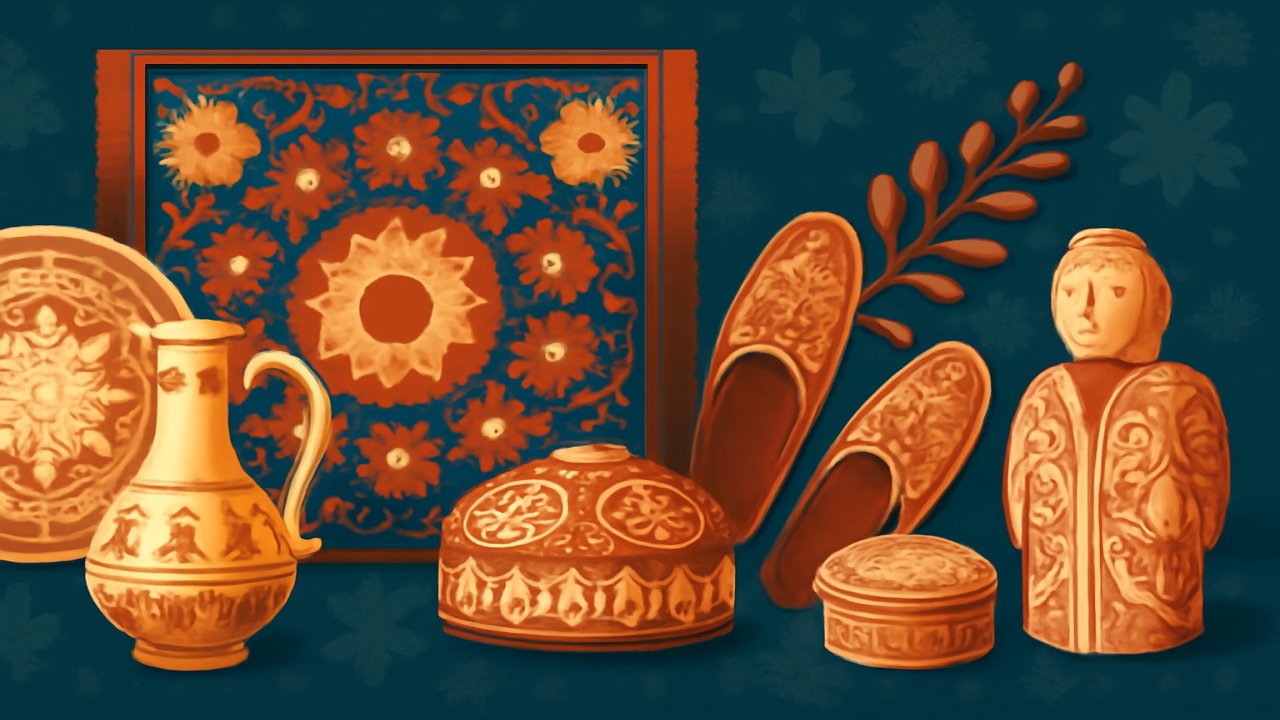
Uzbekistan sat on the Great Silk Road for centuries, and here crafts are not frozen in the past — ceramics are still painted, suzani still embroidered, copper still engraved, today. In Tashkent you can do more than buy a souvenir: you can watch it being made and even try it yourself. It's one of the best experiences for anyone who wants to bring home something with a story rather than an airport magnet.
Below is what to look for, where to see it and how to book a workshop even on a short trip. For a wider route, see our Tashkent guide.
Ceramics: a bowl you paint yourself
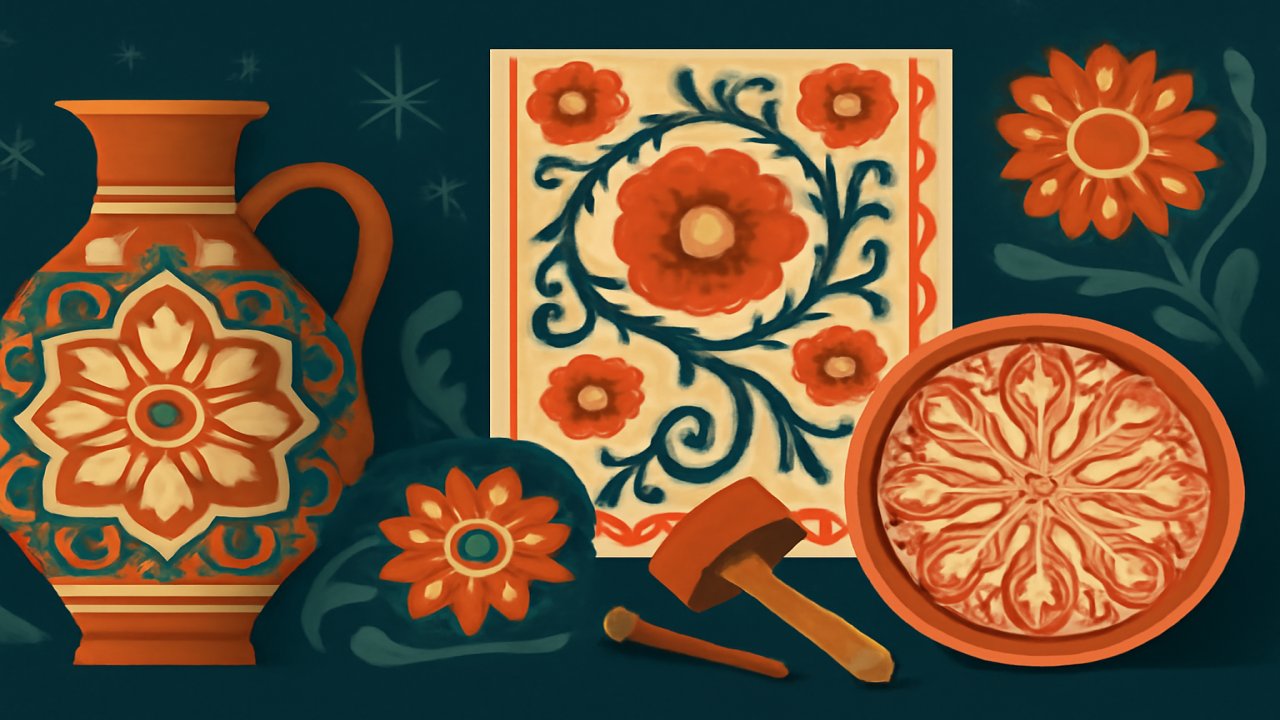
Uzbek ceramics are known for deep blue and turquoise colours and plant-like patterns. Two main schools stand out — Rishtan (bright, glassy glaze) and Gijduvan (warm ochre-brown tones). Tashkent studios will teach you the basics of painting in an hour or two: you take a ready white bowl and apply the pattern with a goat-hair brush.
- What to try: painting a bowl or plate under glaze — the easiest start for a beginner.
- How long: 1–2 hours; firing and delivery are often handled for you.
- What you take home: your own piece and a real sense of why handmade ceramics cost more.
Suzani: embroidery with a whole family behind it
A suzani is a large embroidered panel traditionally prepared for a wedding. Every flower and «moon» circle carries meaning — health, fertility, protection. Hand suzani takes months, so a genuine large piece is expensive — but in a workshop you'll stitch a small fragment (a napkin or pouch) and feel the labour in every stitch.
Copper engraving and knives
Chasing — copper trays, jugs and boxes with fine relief patterns — is a craft passed from father to son. In old-town workshops you can hear the master tapping a pattern into warm metal with a tiny hammer. A special point of pride is the Chust «pchak» knife: hand-forged with a decorated handle. It makes a great gift, though check export rules.
Where to find masters in Tashkent
- Hazrati Imam and the old town: rows of shops where you can often peek into the workshop behind the counter.
- Centre of Applied Arts: ceramics, embroidery, carpets and miniatures under one roof, with frequent demonstrations.
- Bazaars (Chorsu): cheaper, but choose carefully — handmade and factory sit side by side.
Workshops are easiest to book ahead through a guide or your hostel — many studios run by appointment and happily teach in English or with a translator.
Getting fragile things home
Ask for ceramics to be wrapped in several layers — good shops use bubble wrap and cardboard for free. For engraving and knives, check export rules: items that look antique may need a certificate proving they are new. When in doubt, ask for a dated receipt.
What it costs
Prices depend on the material and the maker's time. As a guide: a short ceramic-painting class is usually cheap and good to try; suzani is priced by size and stitch density, so a small souvenir is affordable while a large panel is a serious purchase. Engraving and knives cost more because of the hand-forging and metal.
- Ceramics: painting a bowl is the most budget-friendly way in.
- Suzani: price rises with size; small pouches and napkins make an affordable gift.
- Metal: budget more and check export rules.
How to haggle kindly
At the bazaar bargaining is part of the culture, but in a maker's own workshop pushing the price down hard is frowned upon — there you pay for labour. Ask whether it's handmade or factory, ask to see the process; an honest master will gladly show you. A small polite discount for two or three pieces is fine; aggressive haggling over a unique handmade item looks poor.
A craft is not just a souvenir but a conversation with the maker, tea and the story of how a pattern survived to today. Set aside half a day and Tashkent opens up in a whole new way.