The rules of Tashkent plov
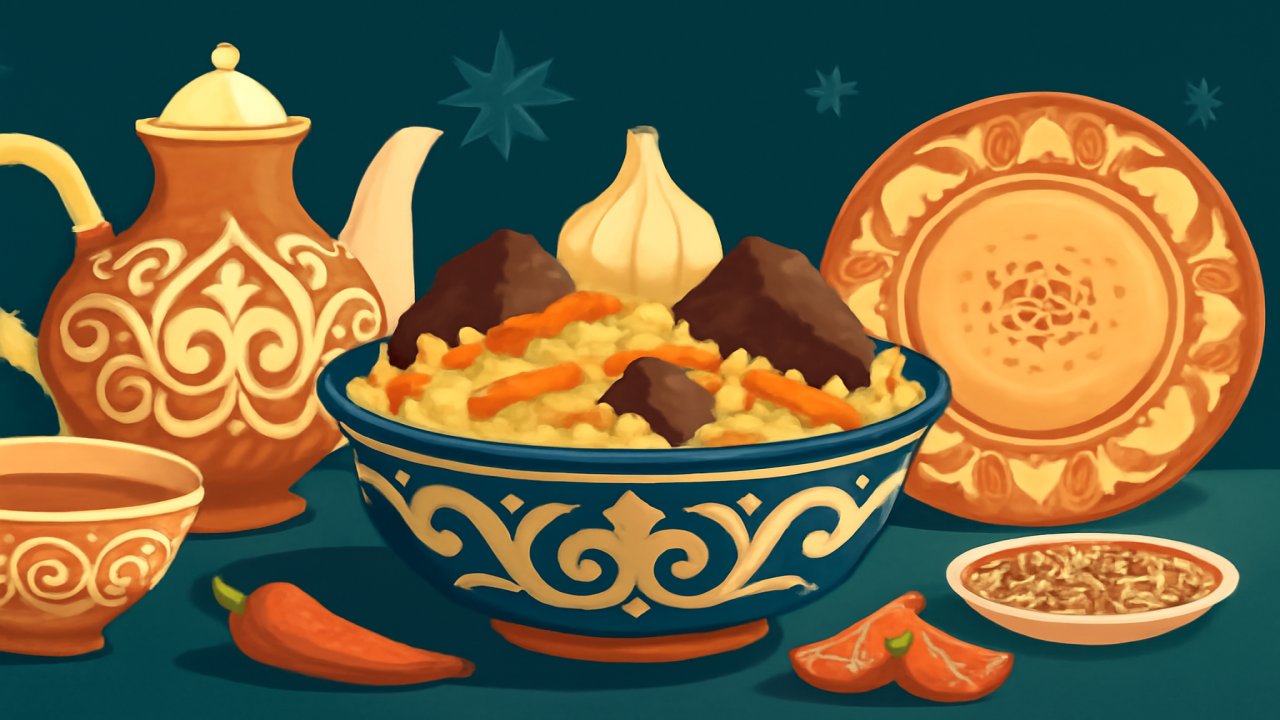
First thing to know: in Tashkent, plov is a daytime meal. It is cooked for lunch, and by 1:30–2 pm the cauldrons run empty. Second: seek out places that cook it in giant kazans over open fire rather than reheating portions. Third: Tashkent-style plov differs from Samarkand's and Fergana's — it comes with yellow carrots, chickpeas, raisins, and often kazy (horse sausage) and quail eggs on top.
1. Besh Qozon plov centre
The city's plov landmark near the TV tower. Five enormous cauldrons, served at conveyor speed. A portion costs 35,000–50,000 UZS depending on toppings. Loud, festive, tourists and locals side by side. Arrive at 11:30–12:00 to see the kazans full.
2. Old-town chaikhanas
Around Chorsu and in the old mahallas, dozens of chaikhanas cook plov "for their own": less polish, more flavour, 25,000–35,000 UZS a plate. Look for where taxi drivers and bazaar traders eat — the most reliable quality signal there is.
3. Morning wedding plov
A genre of its own — nahorgi osh, served from 6 to 9 am at weddings and celebrations. If you are ever invited, do not decline: it will be the most honest plov of your life.
What to order alongside
- Achichuk — a tomato-and-onion salad, plov's inseparable partner.
- Kazy — slices of horse sausage over the rice.
- Green tea — the only correct drink with plov; cold soda is considered a rookie error.
- Ayran — when it's hot outside.
A tiny glossary
"Osh" is what Uzbeks call plov. "Devzira" is the prized rice variety. Say "osh juda mazali!" — "the plov is delicious!" — and the whole chaikhana will smile at you.